Commercial Plumbing: Top Maintenance & Compliance Tips for Businesses
Running a business or managing a commercial property is a balancing act. Every day, you’re juggling budgets, schedules, and safety. But when plumbing issues strike—especially after hours—everything comes crashing down.
Plumbing isn’t just about pipes and drains. It’s about keeping your doors open, avoiding regulatory fines, and making sure your business stays up and running. At Steve’s Plumbing, we help commercial clients stay ahead of costly surprises with strategic maintenance, compliance know-how, and true 24/7 emergency plumbing support.
Unique Challenges of Commercial Plumbing 🏢
Commercial plumbing is like the central nervous system of your building. One blockage, and everything can grind to a halt.
Unlike homes, commercial properties deal with:
- Larger, more complex systems.
- Higher usage—think hundreds of hands on faucets and flushes daily.
- Stricter code requirements and frequent inspections by local authorities.
- Critical business functions that depend on water, gas, and drainage.
For restaurants, a sewer backup is more than a mess—it’s a potential closure. For offices, low water pressure can frustrate employees and customers alike. Multi-tenant buildings? Double the headaches, double the liability.
Routine Maintenance Essentials
Routine maintenance is the secret sauce for business continuity. Think of it like regular oil changes for your work truck—skip them, and breakdowns follow.
Key maintenance steps for commercial properties:
- Annual Sewer Line Inspection: Catch blockages and root intrusion before they become emergencies. Schedule a “Sewer Line Inspection near you” to spot trouble early.
- Drain Cleaning: Prevent slow drains and backups, especially in kitchens and restrooms.
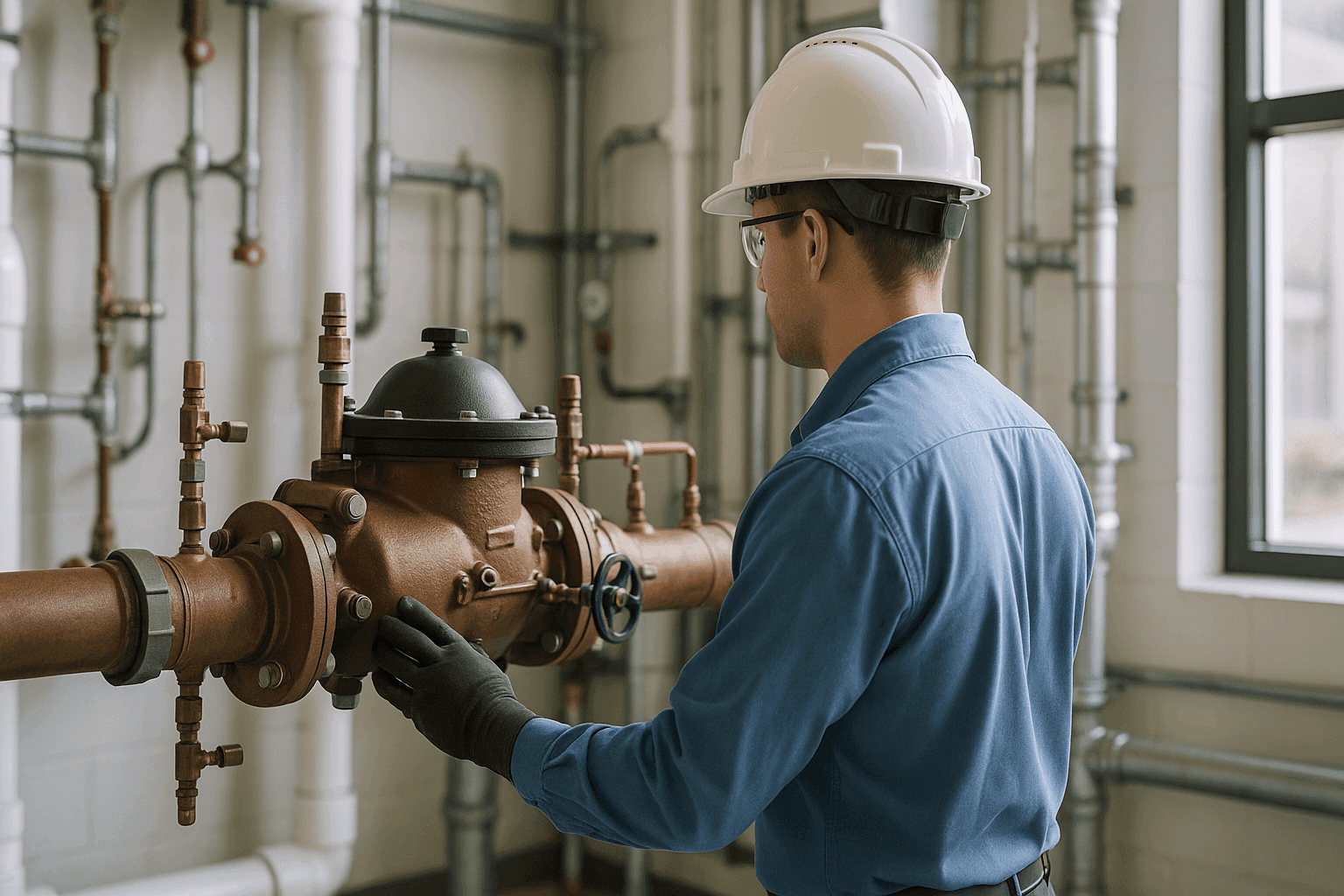
- Backflow Testing: Annual backflow prevention device inspections are required by most cities. This keeps contaminated water from flowing back into your supply lines.
- Leak Detection: Even a pinhole leak can waste thousands of gallons a year. Early detection saves water and money.
- Water Heater & Boiler Service: Avoid cold showers in gyms and downtime for dishwashers.
- Sump Pump Checks: Basements and storage areas stay dry, even when storms hit.
Tip: Set up a maintenance calendar based on manufacturer guidelines and local rules. Many cities require documented inspections, especially for backflow and grease traps.
Compliance Requirements: Backflow, ADA, Local Codes
Compliance isn’t paperwork—it’s your shield against fines, lawsuits, and insurance headaches.
Backflow Prevention
State and city codes (refer to the Uniform Plumbing Code and local health departments) mandate annual backflow testing for most businesses. Failing an inspection can lead to water shutoffs or steep penalties.
ADA & Accessibility
Plumbing fixtures in public restrooms must meet ADA (Americans with Disabilities Act) standards. That means proper sink heights, lever handles, and accessible toilets. Non-compliance? It’s a lawsuit waiting to happen.
Local Inspection Schedules
- Many cities require annual or biannual plumbing inspections.
- Restaurants face extra scrutiny for grease traps and drainage.
- Schools and hospitals must document water quality and safety checks.
Keep records organized. Insurers and inspectors may request them at any time.
Water Pressure and Quality Issues 💧
Ever turn on a tap and get a dribble instead of a gush? That’s more than an annoyance—it can signal hidden leaks, pressure regulator failures, or even city supply issues.
For businesses, water pressure and quality impact:
- Equipment performance (ice machines, dishwashers, boilers)
- Fire suppression systems
- Customer comfort and safety
Hard water and sediment can also clog fixtures and shorten equipment life. Regular water filtration system checks and replacements help protect your investment.
If you notice:
- Fluctuating pressure
- Discolored water
- Unusual tastes or odors
Schedule a professional inspection. Quick action can prevent damage and keep you compliant with health standards.
Emergency Planning for Businesses 🚨
Plumbing emergencies rarely follow a 9-to-5 schedule. A burst pipe at 2 a.m. can flood stockrooms or force you to close your doors.
Smart business owners plan ahead:
- Post emergency plumbing contacts in staff areas.
- Know where main shut-off valves are—train key employees.
- Review your insurance policy for water damage and business interruption clauses.
- Create a response plan: Who calls, who evacuates, who documents the damage?
Steve’s Plumbing offers 24/7 emergency plumbing, so when disaster strikes, help is always a call away.
Protecting Your Business: Practical Tips
- Inspect often: Don’t wait for the city. Routine checks keep you inspection-ready.
- Document everything: Maintenance logs, inspection reports, repair invoices—keep them handy.
- Stay proactive: Replace aging pipes, valves, and fixtures before they fail.
- Know your local codes: City schedules and requirements change—keep up to date.
Regulatory Fines, Business Continuity, and Insurance
Plumbing non-compliance can lead to:
- Fines ranging from hundreds to thousands of dollars per violation.
- Forced closures until repairs are made.
- Insurance claim denials if maintenance isn’t documented.
Business continuity depends on a healthy plumbing system. Preventative care and prompt emergency plumbing response are your best defense.
Why Choose Steve’s Plumbing for Commercial Needs
- Decades of experience with commercial properties—offices, restaurants, retail, industrial.
- Impeccable compliance record. We know what inspectors look for.
- Fully licensed, insured, and available 24/7.
- Local staff familiar with city inspection calendars and sector-specific challenges.
We handle everything from complex gas line installation and backflow testing to water heater repair and repiping. Whether it’s a routine sewer line inspection near you or a midnight leak repair, we’re ready.
FAQs
How often should commercial plumbing systems be inspected?
Most cities require annual inspections, but heavy-use properties (like restaurants) may need more frequent checks.
What’s the first thing to do in a plumbing emergency?
Shut off the water at the main valve, move sensitive equipment, and call Steve’s Plumbing right away.
Are commercial plumbing codes different from residential?
Yes. Commercial codes are stricter, with more frequent inspections and higher safety standards.
Who’s responsible for plumbing compliance in leased properties?
Typically, building owners handle compliance, but tenants may be liable for reporting issues and maintaining fixtures.
Local & Seasonal Considerations
Every city has its quirks. Some schedule surprise inspections. Others focus on grease traps or backflow devices. Seasonal shifts—like freezing winters—can push pipes to the limit.
Restaurants must watch for grease buildup during busy seasons. Schools often schedule major inspections during summer breaks. Retailers may need after-hours service to avoid disrupting business.
Check your city’s inspection calendar. Plan maintenance before busy periods. And always have an emergency plumbing contact at the ready.
Protect your business, stay ahead of inspections, and keep things flowing smoothly.
Call Steve's Plumbing now — or reach us anytime at 844-484-5832 .