Sewer Line Inspection: Signs, Process & When to Call a Pro
Every home and business relies on hidden pipes to keep life running smoothly. When something goes wrong underground, it can turn your day—and your property—upside down. Sewer lines are out of sight, but not out of mind when things back up, stink, or flood your yard.
At Steve’s Plumbing, we know that quick action can stop a minor problem from turning into a disaster. Our team works around the clock, equipped with the latest technology, to keep your lines clear and your mind at ease.
Warning Signs of Sewer Line Problems 🚨
Sewer line issues rarely knock politely. They barge in with unmistakable signals—if you know what to look for.
- Slow Drains: When sinks, tubs, or toilets don’t empty as fast as they should, it’s more than just annoying. It could point to a bigger blockage deep in your main line.
- Bad Odors: That rotten egg smell drifting from a drain? Or worse, from your yard? Don’t ignore it. It’s often a red flag for leaks or breaks.
- Soggy Lawns: Patches of grass that stay wet, especially when it hasn’t rained, may signal a sewer line leak beneath the surface.
- Gurgling Noises: Plumbing that sounds like it’s talking back—bubbling, gurgling, or slurping—could mean trapped air caused by an obstruction.
- Backups & Flooding: The most alarming sign. If water comes up instead of going down, you could have a full-blown sewer backup.
Ignoring these clues is like ignoring a smoke alarm. The longer you wait, the bigger the mess—and the bill.
How Professional Inspections Work
Think of a sewer line inspection as a medical checkup for your pipes. It’s the only way to see what’s really happening underground—without digging up your yard.
Here’s how the process unfolds at Steve’s Plumbing:
- Initial Assessment: Our team starts by asking questions about recent plumbing problems and walking the property for visual clues.
- Accessing the Line: Using a cleanout or pulling a toilet (if needed), we gain access to your main sewer line.
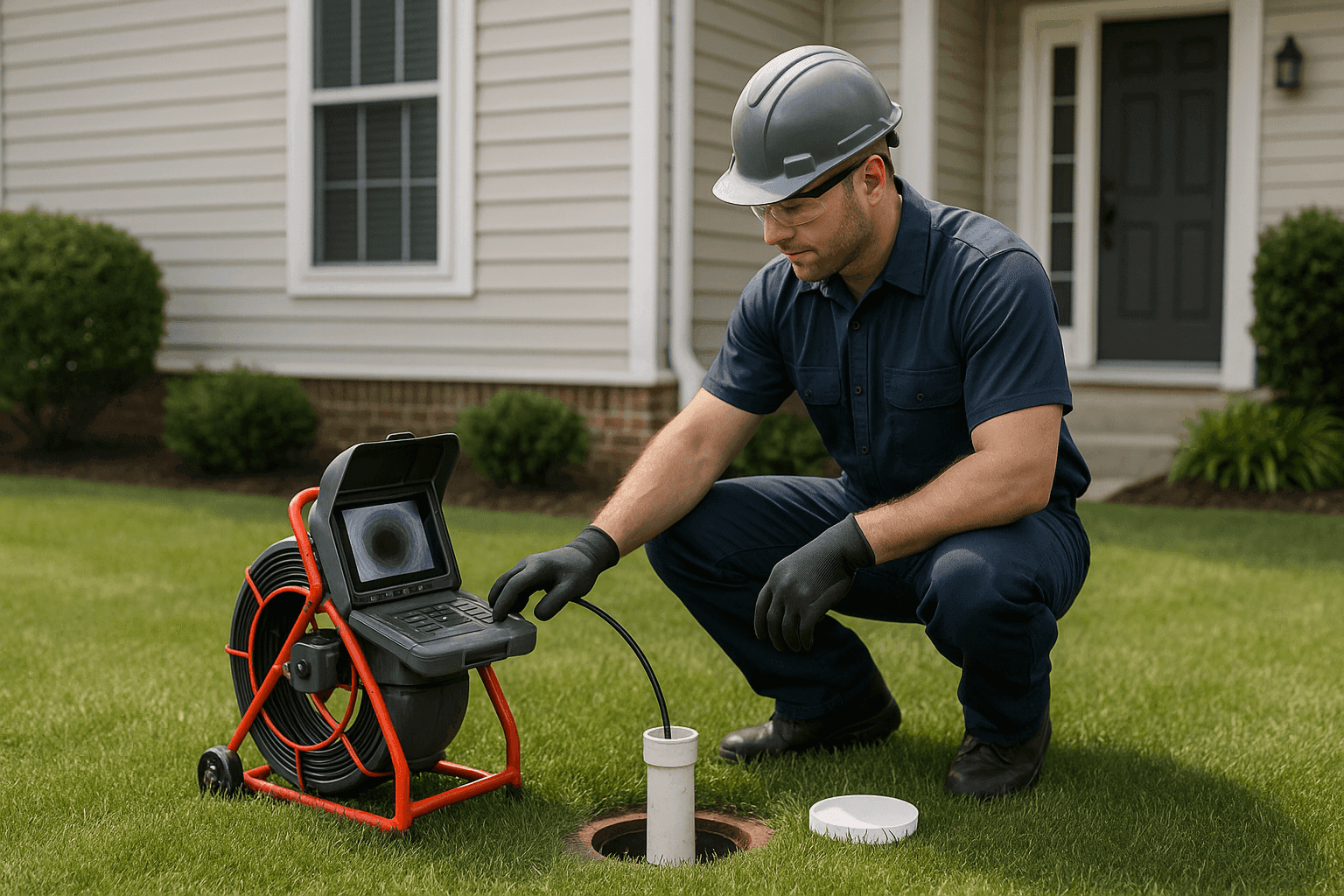
- Camera Inspection: We feed a high-resolution, waterproof video camera into the pipe. This camera snakes through the entire line, sending back real-time images. We can spot anything—cracks, corrosion, tree roots, grease buildup, or collapsed sections.
- Problem Spotting: The footage is reviewed on the spot. We can pause, rewind, and explain what we see—making it easy for you to understand the problem, without guesswork.
- Reporting: You get a clear explanation and a plan for next steps, whether that’s a quick cleaning, targeted repair, or full replacement.
Modern camera technology takes all the mystery out of sewer line inspection. No digging. No damage. Just answers.
When to Call a Plumber
Not every slow drain is a crisis. But some situations call for immediate help:
- Multiple Drains Clogged at Once: If more than one fixture is slow or backing up, the problem is likely in your main sewer line.
- Sewage Smell Indoors or Outside: This isn’t just unpleasant—it’s unsafe.
- Visible Sewage: If you see wastewater coming up in toilets, tubs, or your yard, call for emergency plumbing right away.
- History of Tree Roots: If you live in an area with mature trees, their roots can invade pipes—even if you haven’t had issues yet.
If you’re searching for “Sewer Line Inspection near you,” don’t wait for an emergency. Early action can save your property and your wallet.
Risks of Ignoring Sewer Line Issues
Out of sight doesn’t mean out of danger. Delaying a sewer line inspection can lead to:
- Property Damage: Sewage backups can ruin floors, walls, and belongings.
- Health Hazards: Raw sewage carries bacteria and viruses that put your family or employees at risk.
- Expensive Repairs: Small cracks become big breaks. Minor clogs turn into full replacements.
- Code Violations: Local plumbing codes (like those outlined by the International Plumbing Code) require safe, leak-free sewer lines.
Catching issues early is like fixing a leaky roof before the next storm. It’s always less costly than waiting for disaster.
How Professional Inspections Work
Our process is thorough and efficient, using state-of-the-art video equipment to see exactly what’s going on inside your pipes.
- Step 1: We locate the nearest cleanout or access point to your sewer line.
- Step 2: A specialized sewer camera is gently fed through the pipe. This waterproof camera captures high-definition video, showing us every inch of the line.
- Step 3: On-screen, we identify obstructions, cracks, root intrusion, and other issues in real time.
- Step 4: We explain our findings clearly and recommend solutions based on what we see—no guesswork, no unnecessary digging.
This modern approach means less mess, faster answers, and smarter repairs.
When to Call a Plumber
Sometimes, a plunger or household drain cleaner isn’t enough. Call Steve’s Plumbing if:
- Water backs up in more than one drain.
- You notice sewage smells inside or outdoors.
- Your yard is mysteriously soggy or sunken.
- Your property is older or lined with mature trees (root damage is common).
Don’t wait for a small problem to become a big emergency. Our emergency plumbing crews are on-call 24/7, ready to help.
Prevention & Maintenance Tips
A little prevention goes a long way in keeping your sewer line healthy:
- Don’t flush wipes, paper towels, or hygiene products. Even “flushable” wipes can clog pipes.
- Limit grease down the drain. Grease hardens as it cools, forming stubborn blockages.
- Schedule regular inspections. Especially important for older properties or those surrounded by trees.
- Install a backflow prevention device. This keeps city sewer surges from flooding your space (required by code in many areas).
- Repair leaks fast. Even a small drip can lead to big trouble if left unchecked.
The key is to treat your sewer system with care—like you would a car engine or a roof.
Costs & Time Factors
Sewer line inspections aren’t one-size-fits-all. Costs and timing depend on several factors:
- Access: Easier access (like a ground-level cleanout) means a quicker, less expensive job.
- Length of Pipe: Longer or deeper lines take more time to inspect.
- Severity of Problem: A simple blockage is faster to diagnose than a collapsed or root-filled pipe.
- Location: Urban and rural properties may face different challenges.
On average, a professional sewer camera inspection can be completed in about 60–90 minutes. Repair costs vary widely—catching issues early is always more affordable.
When It’s an Emergency
Some sewer problems can’t wait. If you experience:
- Flooding with sewage in your home or business
- Multiple fixtures backing up at once
- Strong sewage odors, indoors or out
- Sudden, unexplained soggy spots in your yard
Call Steve’s Plumbing for emergency plumbing services immediately. Fast action limits damage and keeps everyone safe.
FAQ: Sewer Line Inspections
How often should I have my sewer line inspected?
For homes over 20 years old, or properties with lots of trees, every 1–2 years is smart. Newer homes may need less frequent checks—unless you notice warning signs.
Can tree roots really break pipes?
Absolutely. Roots seek moisture and can squeeze into tiny cracks, eventually blocking or breaking the line. This is a top cause of sewer problems in tree-lined neighborhoods.
Is sewer camera inspection safe for old pipes?
Yes. The cameras are designed for gentle navigation and won’t damage even fragile, older pipes.
Will my yard be dug up?
Not for an inspection. Modern technology lets us see inside pipes without excavation. Repairs may require digging, but only if necessary.
Local & Seasonal Considerations 🌳
- Tree Roots: In regions with mature or fast-growing trees, root intrusion is a leading cause of sewer line damage. Regular inspections in spring and fall can catch problems before peak root growth.
- Freezing Temperatures: In cold climates, frozen ground can worsen existing cracks. Schedule inspections before winter to avoid emergencies.
- Heavy Rainfall: Areas prone to storms or flooding are at higher risk for sewer backups. Backflow prevention devices and regular maintenance are key.
Steve’s Plumbing has teams nationwide who understand the unique plumbing challenges in your area. Whether you’re in a leafy suburb or a busy downtown block, we’ve seen it all—and solved it.
Spotting sewer line problems early is the best way to protect your property, your health, and your budget. Don’t wait for a small issue to become a disaster. For reliable, fast, and professional sewer line inspection near you, call the team that’s ready 24/7.
Call Steve's Plumbing now — or reach us anytime at 844-484-5832 .